
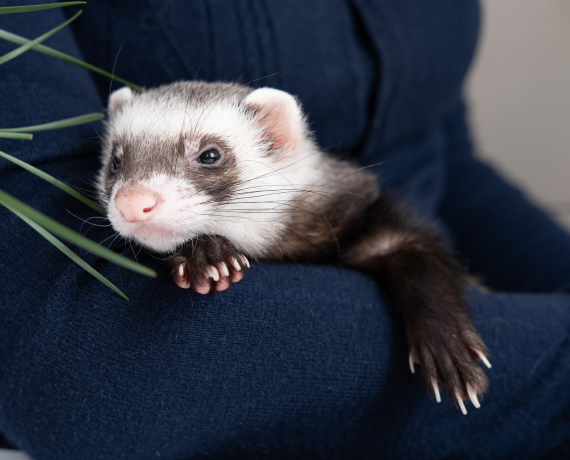
What to Expect at Your Ferret’s Wellness Visit
The treatments and services below are what you can expect when you bring your ferret in for their routine wellness visit.
- New pet exam – Physical exam, fecal analysis, rabies vaccine, distemper vaccine, microchipping
- 6 Month exam – Physical exam, fecal analysis
- Annual exam – Physical exam, fecal analysis, CBC/Blood Chemistry Panel, rabies vaccine, distemper vaccine
- Senior exam – Just like the annual exam, and we also recommend imaging (radiographs, ultrasound or CT) to screen for internal disease
Vaccinating Your Ferret
Exotic Vet Care offers 2 vaccines for ferrets, the rabies vaccine and the distemper vaccine. The rabies vaccine is required for your ferret once a year by law in the state of South Carolina. If your ferret has not had their rabies vaccine in the last 12 months and bites someone, they will need to be quarantined for 10 days or more to check for clinical signs of rabies.
It is common for ferrets to experience vaccine reactions, which can be harmful. Our experienced exotic vets are knowledgeable in ferret care and can recommend the appropriate vaccine plan for your pet.
How to Transport Your Ferret to Our Clinic
To safely and comfortably transport your ferret to our clinic, make sure you have a secure, appropriately- sized carrier that is also well ventilated and easy to clean. Add a few layers of absorbent paper on the floor of the carrier to absorb urine just in case, and place an old clean towel or T-shirt inside as well to make your ferret’s journey more comfortable.
Signs of a Health Emergency in Ferrets
While some cases require urgent treatment, most after-hours concerns are best evaluated by our experienced team. Rather than going to an emergency clinic, the best thing for you and your pet is to come see our specialists at our next available appointment. If no appointments are available, we offer Emergency Admission Mon-Saturday beginning at 8am.
Signs Your Ferret May Need Urgent Care
- Diarrhea
- Vomiting once or occasionally
- Frequent trips to the litterbox with little or no urine for less than 24 hours
- A tense, painful abdomen
- Weakness, lethargy, or depression
Signs Your Ferret May Need Emergency Veterinary Care
- Male ferret unable to urinate or defecate for 24+ hours
- Persistent vomiting or pawing at the mouth
- Diarrhea consistently for 24+ hours
- Heavy, labored breathing
- Active seizures
Ferrets can become critically ill quickly, especially if they stop eating for an extended period of time. Until your ferret can be seen by our specialists you may offer chicken or beef baby food by hand or from a syringe. If they appear weak or disoriented, rubbing a small amount of Karo syrup or honey on their gums may help temporarily before transport to the clinic.
Save on Essential Care with the Ferret VetCare Package
Bringing home a new ferret comes with a lot to learn, and we’re here to make getting started easier. Designed specifically for new ferret owners, our Ferret VetCare Package provides a convenient, affordable way to cover essential routine wellness and preventive care for a healthy new ferret. With our Ferret VetCare Package, you receive $464 worth of care for only $360.
Book your VetCare Package appointment below. Select the “Other Visit” option when booking, and select your VetCare Package from the “Appointment Type” drop-down menu.
This VetCare Package is intended for essential care for new ferret owners only and does not cover visits, diagnostics, or treatments related to illness or injury. Because our VetCare Packages are already discounted, they cannot be purchased with CareCredit, Cherry, or Scratchpay, and no coupons or other discounts can be applied.
Includes Everything Your Ferret Needs to Give Them a Great Start in Life:
Comprehensive Health & Dental Checkup
Ferrets can conceal signs of pain and illness very well. The Ferret VetCare Package includes a full physical examination by one of our vets. These checkups help us look for underlying issues that may not be outwardly noticeable to you.
Intestinal Parasite Screen
The Ferret VetCare Package includes a combined test to screen your ferret for roundworms, tapeworms, coccidia, and giardia, all of which can be harmful to their health.
Ear Analysis
We will check your ferret for ear mites by performing an ear swab and checking the sample under the microscope.
Vaccines
Ferrets require rabies and distemper vaccines. Because it is common for ferrets to have a reaction to their vaccines, we administer pretreatment as needed and monitor them as they recover.
Nail Trim
We will trim your ferret’s nails for their comfort and safety.
Heartworm Prevention
Ferrets are more likely than dogs and cats to become infected with heartworms. Attempts to treat heartworm disease in ferrets are often unsuccessful, so prevention is key. Your Ferret VetCare Package includes an oral heartworm preventative to administer monthly, ensuring year-round protection.
Package Add-Ons
Microchipping: ($30 save $20). Microchip identification is a safe and highly effective means of identifying your pet. It enables lost pets to be reunited with their owners. You will register your pet’s microchip online.
Comprehensive Blood Panel: ($210 save $130). With a small drop of blood, we will screen your pet for infection, inflammation, or anemia. Blood chemistries can reveal any issues related to tissue and internal organ dysfunction and help to detect diabetes, kidney disease, liver disease, and other disorders.
Deslorelin Hormone Suppression Implantation Under Sedation/Brief Anesthesia: ($350 save $155). Deslorelin Hormone Suppression Implantation is an alternative to surgery that can help prevent the onset of adrenal gland disease in ferrets. Adrenal gland disease is very common among ferrets, and is characterized by enlarged adrenal glands and excess hormone production. Clinical signs of this disease include swelling of the genitalia, sexual aggression, skin disorders, and hair loss. Affected glands may become cancerous, and one or both glands can be affected. Performing implantation when the ferret is young is ideal for preventing adrenal gland disease.
Disclaimer: Our VetCare Packages are for healthy pets only. Because the VetCare Packages are already discounted, they cannot be purchased with CareCredit, Cherry, or Scratchpay, and no coupons or other discounts can be applied
Need to Board Your Ferret While You’re Away?
Your pet is in the best hands at our exotic pet boarding facility, where our experienced staff caters to their individual needs and offers them all the comforts of home. Birds, reptiles, pocket pets, and other exotics require a lot of time and attention that most pet sitters and boarding facilities cannot provide.
Common Diseases & Conditions in Ferrets
There are many prevalent health conditions that we see in ferrets.
Adrenal Tumors (Adreno-Cortical Disease) in Ferrets
Adreno-cortical disease is common in ferrets age 2 and up, either caused by hyperplasia (overactivity) or neoplasia (cancer) of the adrenal glands. These glands are a part of the body’s hormone-producing (endocrine) system. For reasons not fully known, the adrenal glands can become diseased, enlarging and pressing on surrounding tissues, like the kidneys and vena cava, and producing excessive amounts of sex hormones. This can result in various clinical signs including:
- Hair loss
- Increased body odor
- Enlargement of the vulva and/or mammary glands in spayed females
- Return of the mating/aggression urge in neutered males
- Dry, brittle coat
- Itchy skin
Additionally, males can develop an enlarged prostate gland, which inhibits the outflow of urine, making it difficult or potentially impossible for the ferret to urinate. This is a medical emergency and should be addressed immediately. Treatment for this disease usually involves surgery to removal part or all of the adrenal glands, and medical therapy.
Exotic Vet Care offers Deslorelin 4.7mg Hormone Suppression Implants to give ferrets some relief from the adreno-cortical disease symptoms. The implant is placed while your pet is under sedation, and is effective for 6 months to several years. If your ferret presents to us with adreno-cortical disease, we will discuss all available treatment options and help you select the best option for your pet’s needs. The deslorelin implant is not a cure, but it can improve your pet’s quality of life.
Heartworm Disease in Ferrets
Heartworm disease is spread by mosquitoes and ferrets are more at risk for heartworm disease than dogs or cats. Clinical signs of heartworm disease in ferrets include:
- Trouble breathing
- Rapid breathing
- Anorexia (decreased appetite)
- Harsh lung sounds (pulmonary rales)
- Heart murmur
- Fluid in the abdomen
- Coughing
- Fluid in the thoracic cavity
- Sudden death (in some cases)
These clinical signs are similar to those that present in infected dogs, but progress more quickly. This makes early diagnosis of heartworm disease very important. However, diagnosing heartworm disease can be challenging, because there are no heartworm tests available that are specific to ferrets. At Exotic Vet Care, we may opt to use a combination of tests to give us the highest likelihood of detecting the disease. Treatment of heartworm disease in ferrets is generally unrewarding, so we strongly recommend keeping your ferret on heartworm preventative year-round.
For this disease in particular, an ounce of prevention is the only cure.
Influenza in Ferrets
Ferrets can catch the flu from humans. In ferrets, the signs of infection include sneezing, coughing, lethargy, fever, and a decrease in appetite. We can diagnose influenza in your ferret by performing a physical exam, discussing your pet’s history of exposure to infected individuals, and excluding other diseases. We can provide supportive treatment to help your pet recover.
Dental Disease in Ferrets
We frequently treat dental disease in ferrets. If your ferret has bad breath, inflamed gums, and tartar buildup on their teeth, they need to see their vet as soon as possible for an oral exam. We might also recommend a teeth cleaning to remove the buildup and treat any existing infection. Dental disease can be very painful for your ferret, and the bacteria in their mouth could spread to the heart and other major organs, resulting in a much more serious health problem.
Gastrointestinal Disease in Ferrets
Another common health concern in ferrets is gastrointestinal disease. We often see diarrhea, vomiting, loss of appetite, and weight loss in ferrets. Likely culprits often include bacteria, parasites, cancer, and/or viruses. Without an early diagnosis, gastrointestinal issues can turn life-threatening very quickly.
Gastrointestinal Foreign Bodies in Ferrets
Younger ferrets will often swallow objects such as plastic, rubber, foam, etc. They can also experience hairball obstruction and impaction if they often lick and chew at their fur. If the foreign body can’t pass on its own, it will need to be surgically removed.
Heart Disease in Ferrets
There are several different types of heart disease that we see in ferrets: Cardiomyopathy, heart blocks, and acquired valvular disease. Heart disease is more often seen in ferrets that are middle-aged or older, with clinical signs including:
- Weight loss
- Weakness
- Rapid breathing
One thing we don’t typically see in ferrets with heart disease is coughing. A heart disease diagnosis is made with physical examination findings, X-rays, EKG, and a heart ultrasound. If your pet’s heart disease is found early, we may be able to treat it with medication.
Cancer in Ferrets
Adrenal gland tumors, insulin secreting tumors, lymphoma/lymphosarcoma, prepucial adenocarcinomas, chondromas, and various types of skin cancer are all quite common in ferrets. As with any serious disease, early diagnosis is key to a good prognosis. Ferrets can develop cancer at any age, and both males and females are affected equally. The problem with cancer is that it can easily be misconstrued as something else, causing a variety of symptoms including:
- Small skin nodules
- Difficulty urinating
- Occasional vomiting or diarrhea
- Pronounced breathing
We need to perform a biopsy to check for cancer cells and make a definitive diagnosis. If your pet has an abnormal growth or nodule, we should see them as soon as possible for an exam.
Treatment of cancer in ferrets typically involves chemotherapy, where we administer injectable or oral medication to destroy the cancer cells or lower the risk of cancerous spread. Unlike people, ferrets don’t experience serious illness while undergoing chemotherapy, though they might have a decreased appetite or some vomiting. They may also lose some of their hair and whiskers.
Approximately 50-70% of ferrets over age 3 will develop some form of cancer. The best way to reduce your pet’s likelihood for this disease is to bring them in to see us biannually for their physical exam and blood work. This will enable us to detect subtle signs of cancer early on, when it can be treated more effectively.