
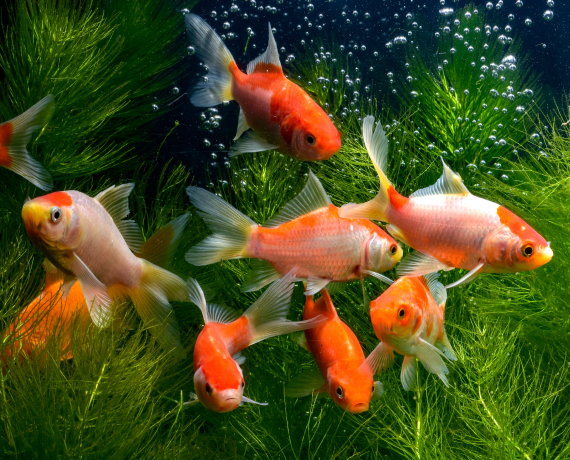
Wellness Care for Fish
The treatments and services below are what you can expect when you bring your fish in for their routine wellness visit.
- New pet exam – Physical exam, fecal analysis, CBC
- 6 Month exam – Physical exam, fecal analysis
- Annual exam – Physical exam, fecal analysis, CBC/Blood Chemistry Panel
- Senior exam – Just like the annual exam, and we also recommend imaging (radiographs, ultrasound or CT) to screen for internal disease
Always transport your fish in the same water they are kept in at home.
THREE containers/bags of your fish’s prepared water are REQUIRED: one to transport your fish to our hospital, one for sedation/anesthesia, and one so your fish can have clean water to go back home.
Can Fish Get Sick?
Fish can absolutely get sick, just like a dog, cat, iguana, or hamster. Some of the most common problems we treat in fish include:
- Bacterial, fungal, parasitic, and viral infections
- Environment-related issues such as trauma, poor water quality, and poisoning
- Nutritional deficiencies
- Genetic issues
- Tumors
How Can I Tell If My Fish Is Sick?
A sick fish will typically exhibit one or more of the following signs listed.
- Cloudy eyes
- An unusual swimming pattern
- Abnormal buoyancy or flotation
- Lump or bump on the skin
- Discolored/damaged skin and/or fins
- Rapid operculation or “breathing”
- Poor appetite
- Low activity
- Resting at the bottom of the tank
- Swollen abdomen (coelomic cavity)
- Scratching against surfaces or “flashing”
We do not recommend giving your fish over-the-counter medication before we see them for treatment, as this can prolong their issues and make it harder for us to diagnose them.
Common Diseases & Conditions in Fish
Common conditions we see in fish include:
- Inappetence
- Parasites such as anchor worms, leeches, ich, fish lice, and flukes
- Skin issues including bacterial and fungal infections
Signs of a Health Emergency in Fish
While some cases require urgent treatment, most after-hours concerns are best evaluated by our experienced team. Rather than going to an emergency clinic, the best thing for you and your pet is to come see our specialists at our next available appointment. If no appointments are available, we offer Emergency Admission Mon-Saturday beginning at 8am.
Signs Your Fish May Need Urgent Care
- Rapid respiration
- Thick slime coating the body
- Red or white blotches on the skin
- Listlessness
- Rubbing frantically against the bottom of the tank
- Loss of equilibrium
Prior to your appointment, have your water tested at a qualified aquarium store and check to make sure the water temperature is correct for your particular species of fish.
Fish Care
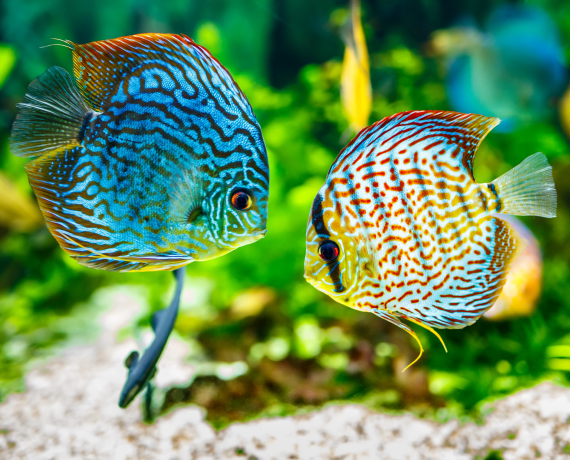
Helping a Sick Fish
The first thing you should do if you find that your fish is sick is to call us. If possible, test your aquarium’s water quality before coming in, as many fish illnesses are caused by poor water quality.
We can offer these services to treat your fish:
- Physical examination
- Blood tests
- Digital radiography, ultrasonography, and CT scan
- Hospitalization
- Surgery
- Necropsy
Transporting Your Fish Safely
- Always transport your fish in the same water they are kept in at home.
- THREE containers/bags of your fish’s prepared water are REQUIRED: one to transport your fish to our hospital, one for sedation/anesthesia, and one so your fish can have clean water to go back home.
- In addition, you should bring along an extra bucket or sealed bag of the water, just in case.
- Fish under 10 inches can be transported in a 2-gallon bucket with a cover.
- Fish over 10 inches, or groups of small fish, can be placed inside double-layered plastic bags that are 2/3 filled with water. Each bag should be secured with thick rubber bands to prevent leaking. Bring extra water just in case.
- If you have large koi, you can transport them in a large (25-gallon) cooler.
- A larger container is always better. A large volume of water increases your pet’s oxygen availability and decreases ammonia levels.
- A car adapter or battery-powered air pump should be used.
Need to Board Your Fish While You’re Away?
Your pet is in the best hands at our exotic pet boarding facility, where our experienced staff caters to their individual needs and offers them all the comforts of home. Birds, reptiles, pocket pets, and other exotics require a lot of time and attention that most pet sitters and boarding facilities cannot provide.
Care Sheets / Handouts
Check back soon.