
Microchipping is one of the simplest and most effective ways to help protect your exotic pet if they ever become lost. Unlike a collar or identification tag, a microchip provides permanent identification that cannot fall off or be removed. Smaller than a grain of rice, a microchip is placed just beneath the skin during a quick procedure and can be scanned by veterinary clinics, animal shelters, and wildlife rehabilitators to identify your pet and help reunite you when they are found.
Many exotic pets can be microchipped, including parrots and other pet birds, rabbits, tortoises, turtles, ferrets, and many other mammals and reptiles. While microchips are especially valuable for pets that spend time outdoors, even strictly indoor pets can escape through an open door, damaged enclosure, or during travel.
At Exotic Vet Care, we use the Nanochip, one of the smallest veterinary microchips available, making it an excellent option for many of our smaller exotic patients. After your pet is microchipped, it’s important to register the chip and keep your contact information up to date. A microchip is only effective if the registration information is current.
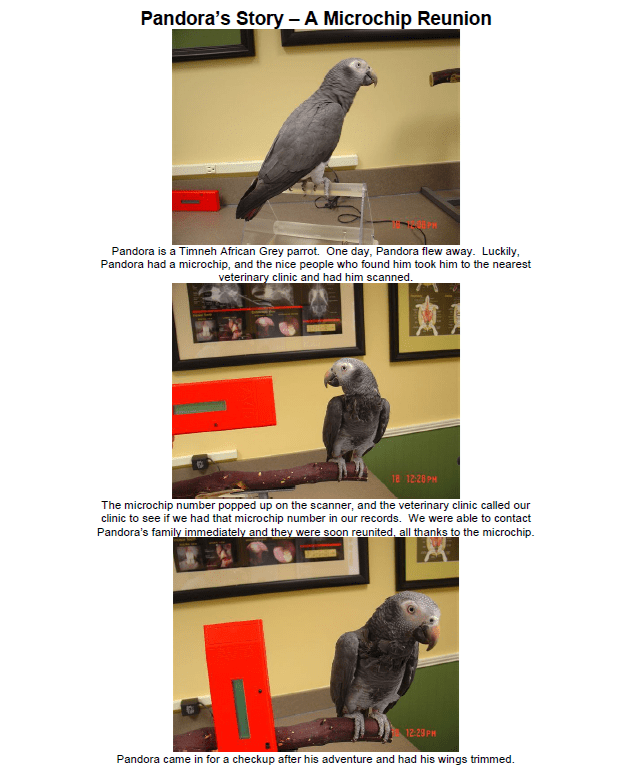
One remarkable example of how a microchip can change an outcome is the story of a missing parrot that was able to find its way back home…

About Us
Our exotic animal hospital is dedicated exclusively to the care of birds, exotic small mammals, reptiles, and even fish! We can offer everything your pet needs for a healthy and happy life, from wellness care and grooming to diagnostics and dentistry, but we can also provide emergency care during our operating hours, along with specialized treatment for referred patients.