

Why Is My Bearded Dragon Black?
A temporary black beard may be a normal response to stress, excitement, or thermoregulation. However, persistent darkening can be a sign of pain, illness, or tissue damage and should be evaluated by an exotic animal veterinarian. A beard that remains black or is accompanied by lethargy, decreased appetite, swelling, or blackened tissue on the tail or limbs should never be ignored.
If you’ve noticed your bearded dragon turning black, you’re not alone. A black beard or darkened skin is one of the most common reasons owners seek veterinary care. In many cases, dark coloration is a normal way for bearded dragons to communicate or regulate their body temperature. However, it can also be a sign of pain, stress, illness, or injury.
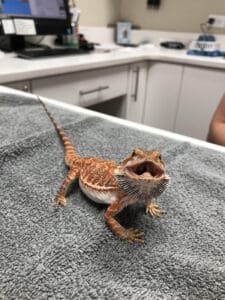
Why Is My Bearded Dragon’s Beard Black?
A black beard is a natural response that bearded dragons use to communicate. While it is not always a sign of illness, it can indicate that something is bothering your dragon.
Common reasons include:
- Stress from handling or environmental changes
- Feeling threatened or defensive
- Territorial behavior
- Breeding behavior
- Excitement
- Pain or illness
- Improper husbandry (temperatures, UVB lighting, diet)
If the beard returns to its normal color after the stressful event has passed, it is often not a cause for concern. However, a black beard that persists for hours or days – especially when combined with decreased appetite or lethargy – should be evaluated by a veterinarian.
Why Is My Bearded Dragon’s Body Turning Black?
Some bearded dragons darken portions of their body to absorb heat more efficiently, particularly in the morning or after lights are turned on. This temporary darkening is usually normal.
However, generalized darkening of the body may also occur due to:
- Pain, Illness, or Dehydration
- Chronic stress
- Improper Temperatures
- Inadequate UVB lighting
- Metabolic Bone Disease (MDB)
- Reproductive Issues (such as egg binding)
- or other medical conditions.
If your dragon remains dark throughout the day or develops other symptoms such as decreased appetite, weight loss, weakness, or abnormal stools, veterinary evaluation is recommended.
What If the Tail or a Limb Turns Black?
Unlike temporary color changes, a black tail, toe, foot, or limb should always be taken seriously.
Dark or black tissue may indicate:
- Tail rot
- Tissue necrosis (death of the tissue)
- Severe infection
- Trauma
- Poor circulation
These conditions do not improve on their own and often require prompt veterinary treatment. Left untreated, damaged tissue can worsen and may spread farther up the tail or limb.
If you notice part of your dragon’s tail or limb becoming black, dry, swollen, or firm, schedule an appointment with your veterinarian as soon as possible.
Other Signs Your Bearded Dragon May Be Sick
A black beard is only one sign to watch for. Contact your veterinarian if your bearded dragon is also experiencing:
- Decreased appetite
- Weight loss
- Lethargy
- Swelling or Bloating
- Difficulty walking or climbing
- Weakness or Tremors
- Sunken eyes
- Persistent diarrhea
- Vomiting or Regurgitation
- Difficulty breathing
These signs may indicate an underlying illness that requires medical treatment.
Can I Treat My Bearded Dragon at Home?
It depends on the cause.
If your dragon briefly darkens after handling, during breeding season, or while warming up in the morning, the color often returns to normal once the situation has resolved.
However, persistent black coloration, especially when accompanied by illness or blackened tissue on the tail or limbs, should not be treated at home without first determining the underlying cause.
Avoid attempting home treatments or applying topical medications unless directed by your veterinarian.
Frequently Asked Questions
Is a black beard always bad?
No. Bearded dragons commonly darken their beard when they are stressed, excited, displaying territorial behavior, or regulating body temperature. The concern arises when the beard remains black or is accompanied by other signs of illness.
Is a black tail normal?
No. Unlike temporary color changes of the beard or body, black tissue on the tail should always be evaluated by a veterinarian, as it may indicate tail rot, necrosis, or another serious condition.
Can stress cause a black beard?
Yes. New environments, handling, changes in routine, or seeing another bearded dragon can all trigger temporary darkening of the beard.
Why is my bearded dragon black after waking up?
Some dragons darken their body in the morning to help absorb heat while basking. If the color returns to normal after warming up and your dragon is otherwise acting normally, this is generally considered normal.
We’re Here to Help
At Exotic Vet Care, we know it can be alarming when your bearded dragon suddenly develops a black beard or darkened skin. While some color changes are a normal part of bearded dragon behavior, persistent darkening or blackened tissue can indicate an underlying medical problem. If you’re concerned about your dragon’s appearance, appetite, or behavior, our team is happy to answer your questions and help schedule an appointment with one of our experienced exotic animal veterinarians.

About Us
Our exotic animal hospital is dedicated exclusively to the care of birds, exotic small mammals, reptiles, and even fish! We can offer everything your pet needs for a healthy and happy life, from wellness care and grooming to diagnostics and dentistry, but we can also provide emergency care during our operating hours, along with specialized treatment for referred patients.