

Why Is My Bird Puffed Up? When to Worry About Fluffed Feathers
If your bird is puffed up, it may be completely normal – birds commonly fluff their feathers when relaxing, sleeping, preening, or trying to stay warm. However, a bird that remains puffed up for an extended period, especially while awake, may be sick or in pain. Persistent fluffed feathers accompanied by decreased appetite, lethargy, changes in droppings, breathing changes, or sitting on the bottom of the cage should be evaluated promptly by an exotic animal veterinarian.
Is It Normal for a Bird to Puff Up?
Sometimes, yes. Birds naturally fluff their feathers throughout the day.
A healthy bird may temporarily puff up when:
- Relaxing or getting comfortable
- Sleeping
- Preening and rearranging its feathers
- Trying to stay warm
- Briefly responding to excitement or environmental changes
The important difference is how long your bird stays puffed up and how they are acting otherwise. A healthy bird will typically fluff its feathers temporarily and then return to its usual appearance and behavior.
A bird that remains fluffed for long periods while awake or seems quieter or less active than usual may be showing an early sign of illness.
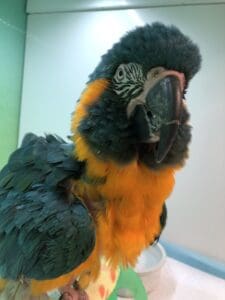
Why Is My Bird Staying Puffed Up?
Birds often hide signs of illness, so subtle changes in appearance or behavior can be important. Persistent feather fluffing can occur when a bird is uncomfortable, weak, cold, in pain, or experiencing an underlying medical problem.
Possible causes include:
- Respiratory disease
- Gastrointestinal illness
- Infection
- Pain or injury
- Nutritional deficiencies or an imbalanced diet
- Internal organ disease
- Reproductive problems, including egg binding
- Exposure to toxins
- Other underlying illnesses
A puffed-up appearance alone cannot tell you what is wrong. Your veterinarian may need to examine your bird and perform diagnostic testing to determine the underlying cause.
Watch for Other Signs of Illness
If your bird is staying puffed up, pay close attention to other changes. Signs that may indicate illness include:
- Eating or drinking less than usual
- Sleeping more or becoming less active
- Changes in the amount, color, or consistency of droppings
- Sitting low on the perch or on the bottom of the cage
- Weakness or difficulty perching
- Weight loss
- Tail bobbing or increased effort while breathing
- Open-mouth breathing
- Discharge from the eyes or nostrils
- Vomiting or regurgitation
- Changes in vocalization or normal behavior
Because birds can conceal illness until they are significantly sick, even subtle changes from your bird’s normal behavior deserve attention.
If your bird remains puffed up while awake or the fluffed feathers are accompanied by decreased appetite, changes in droppings, lethargy, weakness, or weight loss, contact your veterinarian.
If your bird is puffed up and showing difficulty breathing, sitting on the bottom of the cage, unable to perch, extremely weak, or otherwise severely ill, seek veterinary care immediately. Early evaluation is especially important with birds because their condition can deteriorate quickly once obvious signs of illness appear.
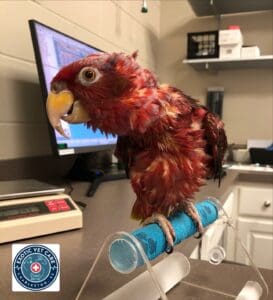
What Should I Do While Waiting for My Appointment?
While arranging veterinary care:
- Keep your bird in a quiet, low-stress environment.
- Minimize unnecessary handling.
- Make food and water easily accessible.
- Monitor eating, drinking, droppings, breathing, and activity.
- Keep your bird comfortably warm, while allowing them to move away from supplemental heat if needed.
- Keep your bird away from other birds until an infectious cause has been ruled out.
Do not give medications or attempt home remedies unless instructed by your veterinarian.
Frequently Asked Questions
Why is my bird puffed up and sleeping?
Birds normally fluff their feathers when sleeping. However, staying puffed up and sleeping significantly more than usual while awake during normal active hours can be a sign of illness, particularly if your bird is also eating less or behaving differently.
Why is my bird puffed up but acting normal?
Brief periods of fluffing are usually normal if your bird is eating, drinking, vocalizing, and behaving normally. Continue to monitor your bird and contact your veterinarian if the puffed appearance persists or other changes develop.
Does a bird puff up when it is cold?
Yes. Fluffing the feathers traps a layer of air close to the body and helps conserve heat. Persistent fluffing should not automatically be attributed to temperature, however, especially if your bird is showing other signs of illness.
Why is my bird puffed up on the bottom of the cage?
A bird that is puffed up and sitting on the bottom of the cage should be taken seriously. Weak or ill birds may no longer have the strength to perch normally. Contact an exotic animal veterinarian promptly, particularly if your bird is lethargic, not eating, or having difficulty breathing.
We’re Here to Help
At Exotic Vet Care, we know that small changes in your bird’s appearance or behavior can be easy to overlook. If your bird is staying puffed up, eating less, sleeping more, or simply doesn’t seem like themselves, don’t wait for symptoms to become severe. Our team is happy to help you schedule an appointment with one of our experienced exotic animal veterinarians so your bird can be evaluated as soon as possible.

About Us
Our exotic animal hospital is dedicated exclusively to the care of birds, exotic small mammals, reptiles, and even fish! We can offer everything your pet needs for a healthy and happy life, from wellness care and grooming to diagnostics and dentistry, but we can also provide emergency care during our operating hours, along with specialized treatment for referred patients.